Lasting impact
Families first use the money to relieve acute hardship and then build their own sources of income. This improves their living conditions in the long term.
Sustainable use of the money
Various studies show that, contrary to common stereotypes about poor people, recipients of unconditional cash transfers do not systematically waste or misuse the money. If anything, scientific reviews of the data show the opposite: the money is used efficiently, wisely and sustainably [1].
It leads to a reduction in alcohol, tobacco and drug consumption and motivates people to work.
Impact in our projects
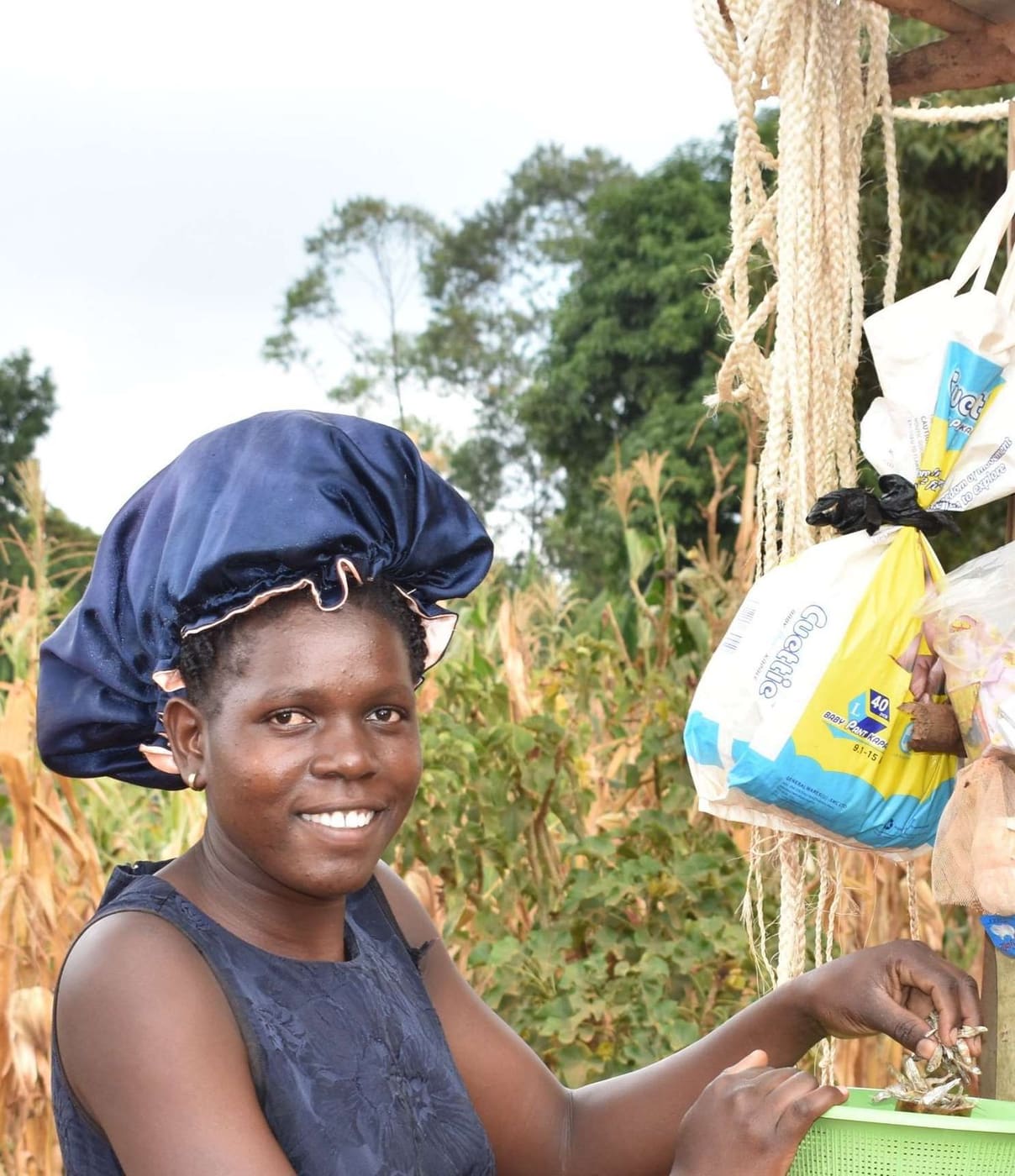
In the Uganda 2024 and Uganda 2025 projects, we revisited all families after one month, and the families from 2024 also after one year. First, they secured their survival, for example with food, school fees or repairs to houses at risk of collapse. They then invested in small businesses, livestock, trade, farming and crafts. One year later, the progress had held: for the families from 2024, average income even rose further to US$3.24 a day [2].
Family income
100%
of all families increased their income
+275%
average income increase
43%
lifted out of extreme poverty after one month
$0.86 → $2.32
average income per day, before and after one month
Mental well-being and family life
The financial improvements also led to fewer conflicts within households, better cooperation and more education for the children.
47%
higher life satisfaction
29%
less stress
54%
fewer depressive symptoms
26%
more action orientation
Evaluated in cooperation with Makerere University (Uganda) and Maastricht University (Netherlands). Our projects
What remains after years
A kick-start that builds wealth
In northern Uganda, young people received grants of around US$400 to set up a trade. After four years, they earned 38% more than the comparison group. Even after nine years, those supported had more assets and more often worked in skilled jobs [3].
The whole region benefits
Studies from the region show that neighbours and local businesses also saw significant gains. Every dollar transferred generated around 2.5 dollars of additional economic activity in the region, with barely noticeable inflation [4].
Sources
- [1]
Evans, D. K., & Popova, A. (2017). Cash Transfers and Temptation Goods. Economic Development and Cultural Change, 65(2), 189–221. https://doi.org/10.1086/689575
- [2]
Neuwirth, L. (2025). How do unconditional cash transfers break the poverty trap? Identifying pathways of behavioral, economic, and psychosocial transformations through lived experience in rural Uganda. Unveröffentlicht, Faculty of Psychology and Neuroscience, Maastricht University.
- [3]
Blattman, C., Fiala, N., & Martinez, S. (2020). The Long-Term Impacts of Grants on Poverty: Nine-Year Evidence from Uganda's Youth Opportunities Program. American Economic Review: Insights, 2(3), 287–304. https://doi.org/10.1257/aeri.20190224
- [4]
Egger, D., Haushofer, J., Miguel, E., Niehaus, P., & Walker, M. (2022). General Equilibrium Effects of Cash Transfers: Experimental Evidence from Kenya. Econometrica, 90(6), 2603–2643. https://doi.org/10.3982/ECTA17945